
Top 10 Places to Visit in Dirang: Arunachal’s Epic Hidden Treasures
Discover the Top 10 Places to Visit in Dirang, Arunachal Pradesh Arunachal Pradesh — a serene Himalayan valley town known for ancient monasteries, healing hot springs, hidden valleys, and rich Monpa culture. A complete travel guide for Northeast India explorers.
Top 10 Places to Visit in Dirang – Discovering Arunachal’s Himalayan Secret
Top 10 Places to Visit in Dirang — just saying it feels like an invitation to slow down and breathe deeper. Nestled along the crystal-clear Dirang Chu River and framed by the Eastern Himalayas, Dirang is one of Arunachal Pradesh’s most peaceful yet rewarding mountain towns.
Here, prayer flags flutter above stone houses, monks chant at dawn, and apple, kiwi, and orange orchards scent the cold mountain air. At an altitude of around 1,500 metres, Dirang is perfect for travelers who want high-altitude beauty without the discomfort of altitude sickness. That’s exactly why the Top 10 Places to Visit in Dirang offer such a balanced mix of adventure, culture, and serenity.
If you’re searching for an authentic Himalayan destination far from crowds, the Top 10 Places to Visit in Dirang will show you why this hidden valley is one of Northeast India’s most unforgettable escapes.
How to Reach Dirang: Your Gateway to the Northeast.
Though Dirang remains off the beaten path, it is well connected by road.
- By Air: The nearest airport is Guwahati International Airport (Lokpriya Gopinath Bordoloi Airport) in Assam, approximately 310 km from Dirang. From Guwahati, you can hire a taxi or take a bus.
- By Road: Dirang lies on the NH-13, also known as the Trans-Arunachal Highway. Regular buses and shared taxis ply from Guwahati, Tezpur, and Bhalukpong. The mountain roads offer breathtaking landscapes but can be challenging, so opt for experienced drivers if self-driving.
- By Rail: The nearest railway station to Dirang is at Rangapara, Assam, approximately 180 km away. However, a more convenient option is the Paltan Bazaar railway station in Guwahati, which is better connected and offers more frequent trains. From either station, you will need to use road transport such as taxis or buses to reach Dirang, as direct rail connectivity to Arunachal Pradesh is not available yet.
Top 10 Places to Visit in Dirang: Where Magic Meets Nature
Now, let’s get to the heart of it—the top 10 places to visit in Dirang which are a must-visit. I’ve curated this list based on their uniqueness, accessibility, and wow factor, drawing from personal favorites and traveler insights. Each one offers something special, from spiritual vibes to natural wonders.
1.Thupsung Dhargye Ling Monastery
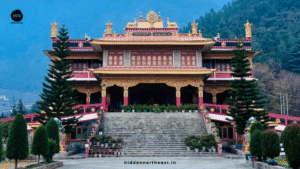
Perched 4–5 km above Dirang town, Thupsung Dhargye Ling Monastery is a striking hilltop monastery inaugurated by His Holiness the 14th Dalai Lama in 2017. Known as “The Place Where the Buddha’s Speech Flourishes,” this Gelugpa monastery features a towering golden Buddha, colorful murals, butter lamps, and calming evening chants. From its 360° viewpoint, you get breathtaking views of the Dirang Valley and, on clear days, Gorichen Peak. Visitors can spin prayer wheels, enjoy thukpa and butter tea, and even stay overnight in simple guest rooms. Best visited in spring or autumn, it’s the spiritual heart and most scenic highlight of Dirang.
You can stay overnight at Thupsung Dhargye Ling Monastery in simple, clean guest rooms on a donation basis .Rooms are basic (mattress on floor, thick quilts, shared toilets, bucket hot water, no Wi-Fi or reliable network), and nights are very cold even in summer. You’ll follow the monks’ gentle rhythm: morning prayers at 5 a.m., butter tea breakfast, evening chanting, and lights out by 9 p.m.
No meat, alcohol, or smoking is allowed, and modest dress is required. Best months are March–May and September–November. It’s not a hotel stay — it’s a rare, soul-soothing chance to live like a pilgrim amid Himalayan silence and golden sunrise prayers.
2. Dirang Dzong
Dirang Dzong is a 400–500-year-old fortified Monpa village and historic fortress perched on a hill just 5 km from Dirang town. Built in the 17th century under the 5th Dalai Lama’s orders (and strengthened around 1831) to defend against raids, it served as an administrative centre, refuge, British outpost, and even a brief wartime jail. The massive stone-and-timber structure, with its narrow lanes, centuries-old wooden houses, prayer wheels, and panoramic views of the Dirang Valley and river, is still home to local families, making it a living heritage site rather than just ruins.
Reached by a short drive or one-hour hike from the bazaar and a climb up stone steps (no entry fee, ILP required), it offers raw, authentic Himalayan history, stunning photo opportunities, and a peaceful, soulful atmosphere.
Best visited October–April for clear skies and manageable weather, Dirang Dzong is a must-see for anyone wanting to feel the real heartbeat of ancient Arunachal.
3. Dirang Hot Springs
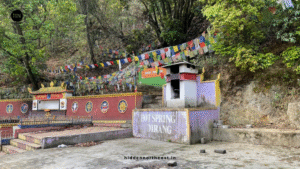
Dirang Hot Springs, located just 1–2 km north of Dirang town along the Dirang Chu River, are natural geothermal pools (40–50°C) rich in sulphur and minerals, famous for relieving joint pain, skin conditions, and pure relaxation. There are two main pools — one clear and inviting, the other murkier and considered more “healing” — reached by a short, scenic 5–10 minute walk down stone steps from the road. No entry fee, no changing rooms, just raw nature with bamboo screens for privacy.
Best visited October–April (especially winter, when the contrast between icy air and steaming water is magical); avoid monsoon. Bring a towel, wear swimwear under clothes, limit soaks to 15 minutes, and don’t use soap. Easily combined with Dirang Dzong or a monastery visit. It’s a simple, authentic, soul-soothing experience — one of the most rejuvenating natural hot springs in all of Arunachal Pradesh.
4. Sangti Valley
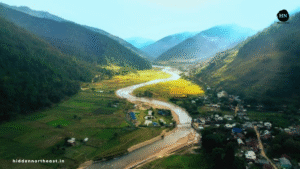
Sangti Valley is a peaceful Himalayan escape known for its open meadows, orchards, and river views. From mid-November to mid-March, visitors can spot rare black-necked cranes in the fields. Highlights include crossing the iron suspension bridge, enjoying riverside picnics with local apples, kiwi, and yak cheese, and staying in cozy Monpa homestays with home-cooked thukpa and butter tea. With sheep farms, birdwatching, short hikes, and stunning sunrise and sunset views, Sangti Valley is best enjoyed slowly—soaking in its quiet beauty and deep mountain calm.
Visit between November and March if your dream is to see the black-necked cranes (they usually arrive around November and leave by late February/early March). Come in March–May if you prefer flowers, milder temperatures, and no crowds.
Sangti Valley is just 14 km (30–40 minutes) east of Dirang on a smooth paved road, making it an effortless getaway. From Dirang Bazaar,you can grab a shared/local taxi for a round-trip, book a private car, or rent a scooter and enjoy the scenic ride yourself. Indian visitors only need an Inner Line Permit (ILP), while foreigners require a Protected Area Permit (PAP). Many homestays offer free or nominal pick-up from Dirang.
Note: You can apply for Inner Line Permit (IIP) online through their official portal: ILP Arunachal Pradesh . For Protected Area Permit (PAP) you can apply through any registered agency.
5. National Research Centre on Yak
National Research Centre on Yak (NRYC), just 6 km from Dirang towards Tawang, is India’s only dedicated yak research institute and a delightful 45–60 minute stop. Visitors can see dozens of majestic yaks (including babies and rare white ones) up close, explore a small museum on yak culture and products, enjoy stunning mountain views, and buy fresh yak milk, churpi cheese, wool items, and ghee at fair prices. Open 9 AM–4 PM (closed Sundays), entry fees required, photography allowed. Reach easily by taxi, shared Sumo, or rented scooter.
6. Mandala Top
Mandala Top, located 30 km from Dirang at around 10,000–11,000 ft, is a breathtaking mountain pass featuring a circle of 108 Buddhist stupas (built in 2018) inscribed with “Om Mani Padme Hum,” prayer flags, and spinning wheels — perfect for a peaceful kora (circumambulation). It offers jaw-dropping panoramic views of the Dirang Valley, orchards, and (on clear days) the mighty Gorichen Peak. Once an old trade and herder route, it’s now a spiritual and scenic highlight with excellent birdwatching amid rhododendron forests.
Best visited March–May (rhododendron blooms, pleasant weather) or September–November (crystal-clear skies); winter brings snow but possible road ice. Go early morning or late afternoon for golden light and fewer clouds. Hire a sturdy taxi/SUV from Dirang as the last stretch is steep and winding; no public transport. Entry is free, spend 1–2 hours doing the short kora (circumambulation), spinning prayer wheels, and soaking in the peace — a perfect blend of spirituality, scenery, and high-altitude magic.
7. Thembang Heritage Village
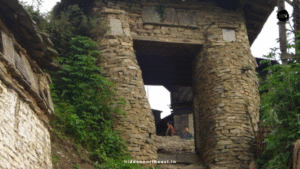
Thembang Heritage Village, 35 km (1–1.5 hrs) from Dirang, is a stunning, still-inhabited 1,000-year-old fortified Monpa settlement and UNESCO World Heritage tentative site. It features massive stone-and-timber houses (400–1,000 years old), narrow cobblestone lanes, ancient carved wooden gates, a hilltop dzong ruin, and a small monastery — all without any commercialization.Around 60 families still live traditionally here, farming kiwi and maize and welcoming visitors with butter tea and stories.
8. Chug Valley
Chug Valley, only 8 km (20–30 min) from Dirang, is a stunning, almost tourist-free Monpa village surrounded by terraced fields, kiwi orchards, cosmos flower meadows, and the clear Mankho River. Home to the friendly Duhumbi Monpa community, it offers authentic experiences: walking through 150–250-year-old stone-and-timber houses, tasting home-cooked thukpa, ara, and butter tea, watching traditional weaving, short forest hikes, birdwatching, and peaceful riverside picnics. Easily reached by local taxi or scooter; stay in cosy family homestays. No crowds, no shops — just pure Himalayan village life. Many travellers call Chug the most beautiful and soul-soothing hidden gem of the entire Tawang circuit.
9. Lubrang village (the nomad village)
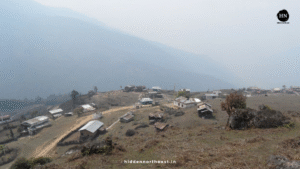
Lubrang, also known as the Nomad Village, is a small semi-nomadic Brokpa settlement located about 22–30 km from Dirang town in West Kameng district. Home to roughly 27 households, the village is inhabited by the Brokpa community, a yak-herding sub-group of the Monpa tribe. For most of the year, families live at higher altitudes near the Tibet border with their yaks, migrating down to Lubrang between November and April to escape heavy snowfall. This seasonal movement, known as transhumance, brings the village to life in winter, offering travelers a rare glimpse into traditional Himalayan nomadic life.
Best Places to Stay in Dirang
Boutique / Luxury Resorts
- Hotel Rigsel
- Awoo Resort
- Brokpa Estate
- Cranes Nest by Taleries
Budget Stays
- Hotel Pemaling
- Pemaling Lords Inn
- Yerin Homestay / Pema Homestay
- Zamdrol Backpackers Hostel
Note: if you travel during winter we recommend you to carry proper resources
Food in Dirang – What & Where to Eat
Must-Try Local Dishes (everyone should eat these): Thukpa, Momos, Ema Datshi (chilli-cheese), Butter Tea, Zan (buckwheat pancake), Churpi, Ara (rice beer), fresh kiwi/oranges.
Vegetarian – Super easy everywhere: veg thukpa, veg momos, ema datshi, fern curry, mushroom soup, buckwheat dishes.
Non-Veg – Chicken/buffalo momos, pork with bamboo shoot, yak meat curry (rare, winter only in Brokpa homes), river fish.
Jain Food – no problem! Just request no onion-garlic at Pemaling, Norling Restaurant or any Sangti/Chug homestay – they happily make Jain thukpa, plain momos, dal-sabzi, buckwheat roti.
Best places: Norling & Pemaling restaurants in bazaar, village homestays (Sangti, Chug, Thembang) for authentic home-cooked meals
Here is a Itinarary for Dirang
Day 1: Guwahati to Dirang
- Start your journey from Guwahati in the morning toward Dirang, a picturesque town in West Kameng district.
- Drive across the Brahmaputra via the Kolia Bhomora Bridge.
- Visit Bhalukpong and the Tipi Orchidarium, home to over 500 species of orchids and rare plants.
- Arrive in Dirang or Sangti Valley by evening.
- Overnight stay in a hotel, homestay, or campsite.
- Enjoy a campfire in Sangti Valley if the weather permits.
Day 2: Dirang to Tawang
- Wake up early near the riverside stay in Sangti Valley.
- Enjoy a riverside breakfast in Sangti Valley.
- Explore Sangti Valley.
- Visit the Sheep Farm along with kiwi and apple orchards (seasonal).
- Visit Thupsung Dhargye Ling Buddhist Monastery in Dirang.( Dirang Monastery)
- Continue the journey toward Tawang.
- Stop at Sela Pass (13,700 ft) and Sela Lake.
- Visit Jaswant Garh War Memorial.
- Reach Tawang by evening. Check in and overnight stay